Our Blog

Snowball Effect

April 3rd, 2024

Winter and its snowball fights are behind us, true, but there might be another kind of snowball heading your way. When you neglect the small steps involved in your everyday orthodontic routines, little problems can start to snowball into bigger ones, affecting your dental health and delaying your orthodontic progress.

Here are three areas where letting the small steps in your routine slide can have consequences:

Dental Hygiene

It can be harder to get your teeth their cleanest while you’re wearing braces. After all, there are wires to get behind and brackets to brush around, and you still need to get that floss in between your teeth. But neglecting your dental hygiene can have big consequences:

  • Demineralization

The bacteria in plaque create acids that strip the minerals from tooth enamel. This process is called demineralization. Wherever plaque is allowed to build up, you’ll start to see white spots in the enamel. This discoloration is a sign that minerals are missing, and is often found around brackets, where it’s harder to brush. White spots can be treated cosmetically, but better to avoid them as much as possible, because eventually they can become . . .

  • Cavities

As demineralization continues, the enamel becomes weaker and weaker, until a hole forms in the tooth—a cavity. Besides damaging your tooth, a cavity can put you behind your orthodontic schedule if you need parts of your braces removed for treatment.

  • Gum Disease

When plaque builds up around the gums, gum tissue becomes inflamed and irritated—this is gingivitis, or early-stage gum disease. Symptoms often include puffy gums, redness, bleeding, and bad breath. Mild gum disease becomes more serious over time, so treat gingivitis early—or, even better, prevent gum disease with careful brushing and flossing.

Looking After Your Appliances

  • Follow Care Instructions

Orthodontic appliances need love, too! Any instructions you get for their care are for a good reason. Brackets can become loose when you bite down on chewy foods. Wires can break when you eat hard candy. Aligners can warp if you leave them on a hot dashboard. If you follow instructions carefully, you won’t need to postpone your progress while you wait for repairs.

  • Use Your Protective Case

If you wear aligners, or a removable appliance, or a retainer, don’t forget to protect these items when you’re not wearing them. This means placing them in their cases, not wrapped in a napkin on your lunch tray, or in the bottom of your gym bag, or anywhere your dog can reach them!

  • Be Proactive If Accidents Happen

Unfortunately, accidents do happen, and loose brackets, broken wires, lost ligatures, and cracked or warped aligners can interrupt orthodontic progress and cause you pain and discomfort. Give our Chicago orthodontic office a call to see if minor damage to an appliance can be handled at home, or whether you should be seen before your next regular appointment for repairs.

Following Your Orthodontic Plan

There’s more to following your orthodontic schedule than arriving on time for appointments. Depending on your treatment, you might be responsible for keeping track of the time you spend wearing:

  • Elastics

Elastic bands can be used to help align your upper and lower jaws. If you don’t wear your bands as directed, you won’t make progress as quickly as you could. And remember to replace your elastics as often as recommended, because after hours of s-t-r-e-t-c-h-i-n-g they lose their effectiveness.

  • Aligners

Most aligners are worn for around 22 hours each day. If you don’t follow your orthodontist’s instructions and wear your aligners for the recommend hours each day, your teeth won’t be in the proper alignment when your next set of trays is ready to begin work.

  • Retainers

If you have a retainer and don’t wear it, your teeth will start to shift position. Skip wearing your retainer long enough, and you might need a return to your braces or aligners to repair any new misalignment.

Don’t ignore what seem like little dental and orthodontic responsibilities. Keep up with daily cleaning and brushing, take care of your appliances, and follow your orthodontic plan, and you’ll finish your treatment with a beautiful and healthy smile—right on schedule.

How to Avoid Delays During Your Orthodontic Treatment

March 27th, 2024

Our patients at Gold Coast Orthodontics hate the thought of delaying their treatments and often ask us what they can do in between their adjustment visits to help. Today, Dr. Iwei Huang and our team thought we would provide some tips on how you can stay on track in regards to your treatment plan time.

The first thing we want you to do is keep your adjustment appointments. Each visit with Dr. Iwei Huang is carefully planned to move your teeth a specific way in a certain time frame. It’s important to note that missing an appointment can add weeks or months to your treatment time.

Next, we want you to let Dr. Iwei Huang and our team know right away if your experience any problems with your braces or appliances. A missing wire, rubber band, or broken bracket can delay treatment time, so we ask that you please give us a call right away to report any issues rather than waiting until your next visit.

Make sure you wear your rubber bands as prescribed by Dr. Iwei Huang. Most, if not all, of our patients will need to wear elastics or rubber bands at some point during their treatment. Not wearing the bands or elastics, or not wearing them enough, can slow down your treatment time. Rubber bands are critical in aligning your bite and are important for the bite-fixing phase of your treatment.

Finally, we want you to maintain good oral hygiene, just as you did before your treatment began. In addition to flossing regularly, we encourage you to brush your teeth several times a day. Not brushing will allow sugar to wear away the cement on the braces, making them less effective in moving your teeth, as well as elevate your risk of developing cavities or tooth decay, which will inevitably delay treatment time.

If you have any questions about any of these tips, or if you have any general questions about your treatment, please give us a call at our convenient Chicago office, or ask Dr. Iwei Huang during your next adjustment visit!

Are you too sensitive?

March 20th, 2024

We’re not talking about tearing up at the end of a sad movie, or that uncomfortable scratchy feeling you get from a coarse wool sweater—no shame in that kind of sensitivity! But it is a shame if you’re feeling unpleasant tooth sensitivity, especially while you’re wearing braces. No fear—we have some helpful ideas to make you more comfortable as you create your healthy, confident smile.

What do we mean by tooth sensitivity? You know it if you’ve felt it. Pain when you have a cold drink. Or a hot one. Or a sweet treat. Wincing when a light breeze hits your smile. Discomfort after an adjustment.

Fortunately, these annoying twinges can be avoided or eased with some proactive practices.

Keep Up with Your Brushing and Flossing

The oral bacteria in plaque break down enamel when they’re left on the teeth for too long. The result is a cavity, which leaves your sensitive dentin, the layer of the tooth between the enamel and the inner pulp chamber, exposed to elements which can trigger pain. These all-too-common elements include heat, cold, air, or sweet foods. If you suspect you have a cavity, a visit to the dentist will make sure your tooth is cleaned and filled to prevent further damage.

Better yet, prevent cavities before they cause tooth sensitivity. It can be harder to keep your teeth their cleanest while you’re in braces, but it’s more important than ever. You don’t want to have brackets and wires removed, even temporarily, to treat a cavity! You can keep decay at bay by:

  • Brushing after every meal and snack.
  • Flossing whenever necessary, making sure to clean around your brackets and wires.
  • Using cleaning tools made for braces for the easiest and most effective dental hygiene.

Avoid Aggressive Brushing

If you’re using anything other than a soft toothbrush, time for a shopping trip! Using a stiff bristled brush is almost always too abrasive for even the strongest enamel. And vigorous brushing is more harmful than helpful. Poor tools and poor technique can wear away enamel, and, when enamel is worn away, the more sensitive dentin is exposed. Your gums can also be injured, exposing the tops of your roots—which are more sensitive than the enameled crowns.

If your teeth are sensitive because of abrasive brushing, talk to Dr. Iwei Huang about possible solutions for keeping your teeth both clean and strong.

  • Use a softer-bristled brush.
  • Try toothpaste designed for sensitive teeth.
  • Practice proper brushing technique. Gently rub, don’t scrub!

Care for Yourself after Adjustments

Your teeth might be sensitive after an adjustment. This discomfort is normal, and should pass in a few days. In the meantime, treat yourself kindly.

  • Brush as usual, taking special care to brush gently.
  • Fill your menu with soft and soothing foods. Cool treats like classic ice cream and pudding, or healthier choices like frozen yogurt and fruit smoothies. Comfort foods like cream soups and mashed potatoes. Or all-day breakfasts of oatmeal, pillowy pancakes, or scrambled eggs.
  • Take over the counter medication as recommended and as necessary.

Be sensitive to your needs while you’re in braces. If you’re feeling any kind of tooth sensitivity, talk to Dr. Iwei Huang at our Chicago office. We have solutions which will make sure you’re both comfortable and twinge-free on your journey to a healthy, attractive smile!

Looking—and Feeling—Your Best in Braces

March 13th, 2024

It’s normal to be a little self-conscious when you first get your braces. Even though you really want to straighten any crooked teeth, or correct a bad bite, you might still be a bit hesitant about sharing your new orthodontic work with the world. What are some ways to get over those under-confident feelings?

  • Keep It Clean

Make sure you brush after every meal to reduce the chance of food particles and plaque sticking to your enamel and brackets. Brushing and flossing is particularly important now, not only to prevent cavities, but because nobody wants to see food stuck in your braces—especially you! If you absolutely can’t brush, rinse with water right after eating.

And carry a small bag filled with all the essentials for gleaming braces: a travel toothbrush, floss, a small tube of toothpaste, an interproximal brush, and a handy mirror to make sure you’re good to go. When you know your teeth and braces are their cleanest, you can’t help but feel more confident.

  • Express Yourself

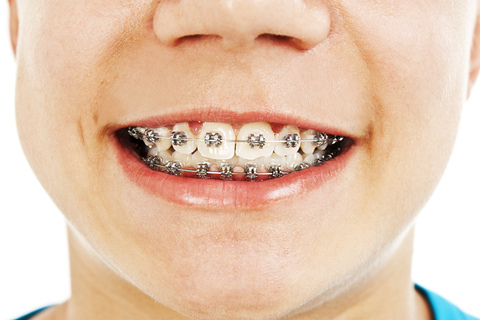
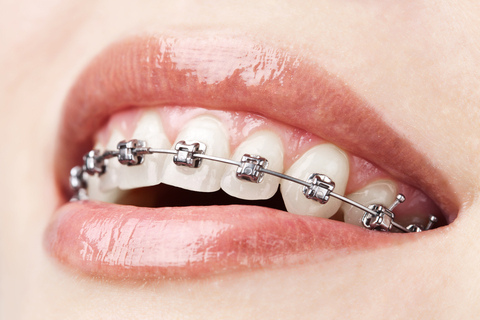
Braces are no longer the one-style-fits-all appliances of the past. Traditional metal braces at our Chicago office are more compact, and now come in different colors and shapes. Metal brackets are typical, but ceramic brackets are an option for an almost unnoticeable look. And don’t forget to accessorize!

You can choose from a rainbow of band colors to make a fashion statement that’s uniquely you. Show your spirit with school colors, celebrate the holidays with festive tones, or choose shades that do wonders for your coloring. Whether you go for bold contrast, mono-chromatic subtlety, or “just because I’m in the mood” quirky combinations, let your braces showcase your style. And remember—you can change that style with every adjustment!

  • Smile with Confidence

Nothing looks better on you than a confident smile. If you’re a little unsure, practice! Some mirror or selfie time will get you used to seeing yourself in braces. Break them in with friends and family before you go public. Remember that any difficulties with talking or eating should only last a little while.

Above all, you’re still your unique and valued self. You can wear braces and be a good friend, a student, an athlete, a lovestruck Juliet on the theater balcony, a star at your after-school job. Don’t let wearing braces hold you back from the activities you love.  Act like your old self, and you’ll soon feel like your old self!

It’s normal to feel a little self-conscious when you first get your braces. But when you care for yourself and your braces, good things happen! If you’re having difficulty adjusting, talk to Dr. Iwei Huang. We want to help make sure your journey to a beautiful, healthy smile is as rewarding and as positive as it can be.