Our Blog

To use or not to use mouthwash; that is the question

May 27th, 2026
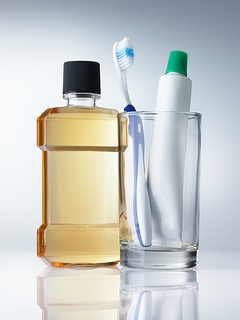
A famous mouthwash company chose the marketing slogan, “Better than flossing.” As a consumer, would you believe a high-end commercial that essentially tells you to stop flossing? Just use this brand of mouthwash and the risk of gingivitis, cavities, etc., is gone. What a wonderful idea! Now for the reality: This is simply not true.

The company that made these claims received some negative feedback for making this false claim. Does this mean that all mouthwashes are ineffective? Absolutely not. It takes a little bit of research to know which mouthwashes are most effective and best suited for you. Here are some key points to remember when choosing a mouthwash.

First, think about why you want to use a mouthwash. If you are at high risk for cavities, you would benefit from a fluoride mouthwash. Check the labels to see which ones contain fluoride.

If you have active gingivitis, a mouthwash with some antibacterial properties would be preferable. Read the labels carefully. You do not want a mouthwash containing alcohol. If you have active periodontal disease, an antibacterial mouthwash is appropriate, though you may want to discuss which kind would be best for your individual needs.

Prescription mouthwashes are also an option. You should pay close attention to the directions, such as how much and how long to use them. There is one brand in particular whose effectiveness can steadily diminish if you use it continually. There can also be side effects you should discuss with our office and/or your pharmacist.

Some great mouthwashes for kids change the color of plaque on their teeth to help them see how they are doing with their brushing. This is a great learning tool for the child and the parent! Why not pick up a bottle for yourself next time you’re at the store and evaluate your own performance?

Beware of claims that a mouthwash can loosen plaque. This is not accurate. Beware of any mouthwash that has alcohol. This is worth mentioning twice. Take care of your taste buds. If you are using a strong mouthwash, it can reduce your sense of taste.

These tips should help you choose the right mouthwash for your needs. Please contact Dr. Iwei Huang at our Chicago office with any specific questions!

How do I know if I have dry mouth?

May 20th, 2026

Dry mouth, also medically known as xerostomia, is the condition of not having enough saliva, or spit, to keep your mouth wet. There are many ways to keep dry mouth at bay, including:

  • Brushing your teeth after every meal with a fluoride toothpaste
  • Flossing every day after a meal
  • Avoiding tobacco, as well as drinks containing alcohol or caffeine
  • Avoiding dry foods, as well as foods containing high salt, acid, spice, or sugar levels
  • Drinking water frequently or sucking on ice chips
  • Using a humidifier at night

Please call our convenient Chicago dental office to learn more about dry mouth, or ask us during your next visit!

Electric Toothbrush: How do you choose?

May 14th, 2026

Since the introduction of the power toothbrush in the 1960s, this tool has undergone many technological advances, from design and bristle motions to rotation oscillation and sonic vibration.

What is rotation oscillation? That’s when the head of the toothbrush alternately rotates in one direction and then the other. Power toothbrushes can deliver up to 50,000 strokes per minute, which is much more effective than the average 300 strokes per minute with a manual toothbrush.

A smaller brush head is available for hard-to-reach areas, which is a good alternative for small mouths. The brush heads are replaceable and should be changed every three to six months. Each family member should have his or her own brush head while sharing the base motor. What a great deal! Check the handle size. A large handle is better for members of the household with arthritis, children, or family with other physical disabilities.

A rechargeable toothbrush is ideal. It should deliver enough power on a full charge for one week of brushing.

We recommend you brush for a minimum of two minutes. Some electric toothbrushes include a signal you can hear, such as a beep every 30 seconds, to indicate it's time to switch to a different area of the mouth. Others sound an alert after the full two minutes has elapsed.

Will an electric toothbrush harm the teeth or gums? Studies indicate that people tend to apply more damaging pressure to their teeth and gums during manual brushing than when they use an electric toothbrush. If you experience tooth sensitivity, choose a model with pressure sensors that stop the toothbrush any time you press too hard.

Who would benefit from an electric toothbrush? Everyone! Consumers with a physical disability may have specific needs that power toothbrushes can address. Children also tend to maintain better oral health hygiene when they use an automatic toothbrush. Plus, many of them find it fun to brush!

Automatic toothbrushes really do remove debris better than the old-fashioned way. You may have heard the term “biofilm.” Better known as plaque when it occurs in the mouth, biofilm is the debris and bacteria that cause infections to your teeth. It regenerates quickly, so healthy habits are the best defense for a healthier you! With a healthier mouth, you face a lower risk of gum disease and other conditions like heart disease: mouth health has been linked to heart health.

When you're ready to make your decisions, be a wise comparison shopper. Consult with Dr. Iwei Huang at Gold Coast Orthodontics to decide what is best for you!

Double Duty

May 6th, 2026

If you play a contact sport, you know about mouthguards. You know about the cushioning protection they provide for your teeth. And not just your teeth—mouthguards also help protect your lips, tongue, and jaw, helping you avoid or minimize many of the injuries caused by collisions.

But you don’t have to be part of the defensive line or face off on center ice to wear a mouthguard. It pays to be proactive with your oral health in any activity where impact is a possibility. Whether you play a team sport, practice gymnastics, ride a bike, ski, skateboard, or participate in other athletic pastimes, there’s almost always the risk of impact—with a ball, with the mat, with the sidewalk, with another person.

So, how do mouthguards protect your teeth and mouth? It’s a combination of materials and design. Mouthguards are made of a strong, cushioning material such as plastic or silicone which helps absorb and distribute the force of impact, usually in the form of a horseshoe-shaped piece which fits over your upper teeth. The specific design can be tailored to the sport or activity you’ll be using it for.

And now that you’re wearing braces? Working toward an attractive, healthy smile doesn’t mean you can’t be active or find a mouthguard which will work for you. In fact, when you wear braces, mouthguards do double duty—they protect your mouth and teeth, and they protect your braces, too!

Even minor impacts can damage wires and brackets, and damaged braces means more time at the orthodontist and lost treatment time. More important, your guard not only helps protect your brackets and wires from impact injury, it protects your delicate mouth tissue from trauma caused by impact with your brackets and wires.

Because you probably have braces on both upper and lower teeth, the usual mouthguard design might not work for you. To make sure you’re completely protected, you may need a guard which covers both upper and lower arches.

There are over-the-counter mouth guards designed for braces, and even for covering both your upper and lower teeth. These might be one-size-fits-all or fit-it-yourself guards, or models which should be used only after a fitting at our Chicago orthodontic office. While some of these guards are better than others, the best option for your teeth—and your braces—might be a custom mouthguard.

What are the benefits of a custom guard for orthodontic patients? They:

  • Provide a perfect fit around teeth and braces
  • Protect better because they fit better
  • Are designed for easy breathing and speaking
  • Are less bulky
  • Are more durable
  • Fit more comfortably
  • Can accommodate orthodontic adjustments
  • Can be tailored to your specific sport or activity.

Custom mouthguards are more expensive, because they are individually crafted for your teeth and braces, but in terms of effectiveness, they are the best guards out there—because they are individually crafted for your teeth and braces. If cost is an issue, Dr. Iwei Huang can let you know whether an over-the-counter option might work for you.

An active life should mean proactive dental care. Wearing a mouthguard when you’re wearing braces protects both your body and your orthodontics. Whichever guard option you choose, it’s a good idea to check out the fit with Dr. Iwei Huang to make sure you’re getting all the protection you need for both when your mouthguard is doing double duty.