Our Blog

Are braces right for me?

August 21st, 2019

According to Preferred Consumer, it's estimated that 50 percent of people around the world have teeth that are crooked, not aligned properly, or irregular. Fortunately today, orthodontics has advanced to the point where corrective devices, such as braces and retainers, are less obvious, more comfortable, and can be worn for shorter periods of time.

So, with that being said, how do you know if braces are right for you? Typically your dentist will be able to point out any issues with your teeth at your regular six-month cleanings and recommend you to an orthodontist. But here are some other things to keep in mind when deciding whether or not braces could be in your future:

Crooked Teeth

As children grow, so do their teeth. And more often than not, certain teeth will grow in crooked. This isn't uncommon, as the majority of children will require some sort of teeth correction, whether that’s braces or retainers. Retainers are custom-made devices that either work to hold teeth in place or correct tooth alignment. They're often worn all day, aside from meals, at the start of the treatment period and then eventually are rolled back so they're just worn at night. Braces on the other hand are worn for at least a year and work to help straighten or position teeth.

Overbite or Underbite

The other main oral issue that orthodontics helps correct is uneven alignment, such as an underbite or an overbite. You might hear Dr. Iwei Huang refer to this as a "malocclusion," which means "bad bite." Braces can help rearrange your alignment so an overbite or underbite is less of a problem. Typically after the braces come off for this sort of treatment, patients need to wear a retainer from Gold Coast Orthodontics to finish the treatment.

While braces are typically associated with dental issues in children, more adults are wearing the devices as well. About one in every five braces wearers are adults; a sign that it's never too late to correct any oral issues. Part of this is due to the technological advancements in orthodontics. For instance, new braces feel much better and come in a variety of styles — including clear — so they're far less obvious. Plus, the wires on braces are now made from advanced metals, which are stronger and lighter, so they get the job done much more efficiently. With so many people wearing braces these days, nicknames like "metal mouth" and "brace face" are almost a thing of the past. What's more, is that insurance plans are increasingly covering orthodontic treatment, making braces a much more feasible option for families on a budget.

When weighing whether or not braces are in your future, it's important to study all of your options about the styles of braces and what treatment option is best for you. Also be sure to contact your insurance provider to see what is covered and what will have to be paid out of pocket. It might take a few years of treatment, but braces can give you that winning smile for the rest of your life. Call our Chicago office with any questions you might have!


The Truth about TMJ

August 14th, 2019

TMJ is the quick way of referring to your Temporomandibular Joint. Pardon the pun, but that’s quite a mouthful! What is this joint, what does it do, and, if your Dr. Iwei Huang and our team have told you that you have a TMJ disorder, what can we do to help?

The Temporomandibular Joint

Your two temporomandibular joints are amazing works of anatomical design. These are the joints where the temporal bone in the skull meets the mandible bone of the jaw, and allow our mouths to open and close, move back and forth, and slide from side to side. Muscle, bone, and cartilage work together to provide easy movement and to cushion the joint. But sometimes, the joint doesn’t work as smoothly as it should, and this can lead to Temporomandibular Joint Disorder, or TMD.

When Should You Suspect You Have TMD?

You might have TMD if you experience any of these symptoms:

  • Painful chewing
  • Pain around your TMJ, or in your face or neck
  • Earaches
  • Changes in your bite
  • Jaws that are limited in movement or lock open or shut
  • Clicking, popping or grating noises when you open and shut your jaw

There are many conditions linked to TMD. If you grind your teeth at night, have arthritis in the jaw, have suffered an injury or infection in the area, or have problems with your bite, for example, you might be more likely to have TMJ problems. If you suspect you have TMD, or suffer from any of the symptoms listed above for an extended period, give us a call.

Treating TMD

During your visit to our Chicago office, we will check your medical history, and examine your head and neck. We can take an X-ray or scan if needed for further examination of the joint. Because there is no real scientific agreement yet about the best way to treat TMJ disorders, a conservative treatment plan is often best. If you do show signs of TMD, we might first suggest relaxation techniques, over-the-counter pain relievers, or the use of ice packs or moist heat compresses. A change to a softer diet can help, and you should stop chewing gum and making any exaggerated jaw movements.

If these self-care practices aren’t effective, we might suggest a nightguard. This appliance is a comfortable and flexible mouthguard custom fitted for you, and will bring relief from teeth grinding when worn at night. If this treatment is not effective, talk to us about other options.

Luckily, most cases of TMD are temporary and don’t become worse over time. But any persistent discomfort is a good reason to visit us. Whether you have TMD, or any other problem causing you pain in the head or jaw, we want to help.

Caring for Your Smile While Wearing Invisalign®

August 7th, 2019

Getting your braces off is exciting. You’ve been working on your new smile for months or years, and it’s time for the trips to our Chicago office to pay off. Can you imagine how bad it would be to discover that your teeth are straight, but that there’s decay?

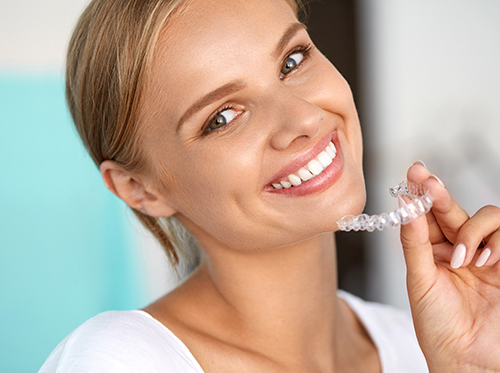
Caring for your smile while wearing Invisalign goes beyond just waiting for your teeth to get straighter. It involves cleaning your teeth regularly and thoroughly to prevent tooth decay. That way, your smile will be more beautiful than ever when you’re done with your Invisalign treatment.

Take Your Trays Out

The first difference you may notice between Invisalign and traditional metal braces is that Invisalign aligners are invisible, but there’s another important distinction as well. Invisalign braces are removable. You can take the trays out, and you should. Remove the trays while you’re eating so you don’t get food stuck in them. Also, remove them while you’re cleaning your teeth so that you can have full access to all the nooks and crannies in your mouth.

Brush Normally

The guidelines for brushing your teeth with Invisalign don’t change compared to braces. Brush your teeth at least twice a day using a soft toothbrush and a fluoride toothpaste, being sure to get all surfaces of your teeth. If possible, brush after each meal.

If you can’t, be sure to drink some water and swish it around in your mouth when you’re done eating to get rid of the extra food on your teeth. Leaving carbohydrates, such as sugar and starch, on your teeth opens the door to tooth decay.

Floss and Wash

Flossing your teeth gets out the bits and pieces stuck between them. It’s a time-consuming task when you need to navigate the wires of traditional metal braces, but thanks to Invisalign’s removable design, flossing is no problem. Rinsing your mouth with a fluoride antibacterial mouthwash also helps clean your teeth because it gets into all of the spaces. Floss and rinse one or two times daily.

Cleaning Your Trays

Cleaning your Invisalign trays keeps them from getting riddled with bacteria, and it helps keep your teeth free from excess food. You can use the Invisalign cleaning system, which involves placing the trays in a tub with cleaning crystals. The plastic trays are clean after 15 minutes. You can also ask Dr. Iwei Huang for other ways to clean your trays.

Cosmetic Braces Options

July 17th, 2019

If you’re like most adults, you aren't enthused about the idea of having to get traditional metal braces. The look, feel, and cost keep many people from getting the smile they want.

However, many options are available at our Chicago office if you’re looking for a cost-effective and more discreet way to straighten your teeth.

Choosing the right kind of cosmetic braces depends on the severity of your situation. Some cosmetic braces, such as clear aligners, are best suited for mild to moderate spacing or crowding of the teeth, and minimal bite alignment issues. But there are options for people who need more intense treatment.

Below is a list of some of the most popular options available today.

Invisalign® involves multiple clear aligner trays that you wear in a predetermined order to achieve the desired treatment result. Most people won’t even know you’re wearing them, and they offer solid results. Clear aligners might not be suitable for all cases; they are mainly for those with mild to moderate spacing or crowding of the teeth and minimal bite alignment issues.

Ceramic braces are similar to traditional braces, but less visible due to translucent ceramic brackets and/or wires. They are not quite as discreet as clear aligners such as Invisalign, but they are more subtle than traditional braces and can be used for most cases.

Lingual braces are attached to the back of your teeth instead of the front. They are highly discreet but effective at moving teeth and correcting bite issues. Their cost is higher due to the materials involved, and the additional time and effort required to place them accurately.

Self-ligating braces are similar to traditional metal braces, but no elastics (ligatures) are required on the bracket because they have built-in clips to hold the wire against your teeth. People will perceive you’re wearing them, but they don’t need as many adjustments from Dr. Iwei Huang, so you’ll require fewer appointments and undergo a shorter treatment time.

It’s only natural to have questions before you embark on a course of braces treatment. Speak with Dr. Iwei Huang or any of our staff members at our Chicago office about your goals, budget, and timeframe, and we’ll help you find the right fit!